
CIPP vs. Spin Cast Epoxy Pipe Lining: Which Is Right for Your DFW Home?
Two Methods, Two Different Jobs
If you’ve started researching trenchless pipe repair in the Dallas–Fort Worth area, you’ve probably run into two terms that sound similar but aren’t: CIPP lining and spin cast epoxy lining.
Most trenchless contractors offer only one of the two and will tell you it’s the right answer no matter what’s wrong with your pipes. The truth is more useful: CIPP and spin cast epoxy are two different tools that solve two different problems, and choosing correctly can mean the difference between a 50-year fix and a repair that needs follow-up work in five.
This guide breaks down both methods in plain English – how they actually work, what each is best at, and how to know which one your home needs.
The Short Answer
- Choose CIPP if your pipe is structurally compromised – cracked, broken, deformed, or missing sections of wall.
- Choose spin cast epoxy if your pipe is still structurally sound but corroded, pitted, or developing pinholes – especially if it’s small-diameter, has lots of branches, or runs vertically through your home.
The rest of this guide explains why.
What Is CIPP (Cured-In-Place Pipe) Lining?
CIPP is the original trenchless lining method, used since the 1970s. The process creates a complete, structural new pipe inside your old one – and that’s the key word: structural.
Here’s how it works:
- A flexible felt or fiberglass liner is saturated with an epoxy resin.
- The liner is inserted into the damaged pipe through a small access point (often an existing cleanout), then inverted or pulled into position.
- Air or water pressure presses the liner tightly against the pipe wall.
- The resin is cured using hot water, steam, or UV light, hardening into a rigid pipe-within-a-pipe.
Once cured, the new CIPP liner is load-bearing on its own. Even if the original pipe completely fails or disintegrates around it, the liner continues to function as a fully structural pipe.
Learn more about our CIPP pipe lining services.
What Is Spin Cast Epoxy Pipe Lining?
Spin cast epoxy is a newer trenchless method. Instead of installing a separate liner inside your pipe, the process coats the interior wall of the existing pipe with epoxy, sealing cracks, pinholes, corrosion pits, and joint gaps from the inside.
The process:
- The pipe is cleaned thoroughly with high-pressure water jetting to remove rust, scale, and debris.
- A spinning applicator head is pulled through the pipe at a controlled speed.
- As it moves, the applicator distributes a precisely measured epoxy coating onto the pipe wall.
- Multiple passes may be made to build up the target thickness.
- The epoxy cures inside the pipe, bonding to the host pipe and forming a smooth, seamless inner surface.
The result is a fully sealed, corrosion-resistant interior surface – without installing a separate liner.
Learn more about our spin cast epoxy pipe lining services.
CIPP vs. Spin Cast Epoxy: Side by Side
Comparison table: CIPP vs Spin Cast Epoxy pipe lining methods across key criteria
| CIPP | Spin Cast Epoxy |
|---|---|
| Structural strength: Fully structural — stands alone if the host pipe fails | Structural strength: Coating that bonds to (and relies on) the host pipe |
| Best pipe diameter: Medium to large (4″ and up — mains, sewer laterals) | Best pipe diameter: Small to medium (1.5″–6″ — branch lines, vertical stacks) |
| Best for: Cracked, deformed, or partially collapsed pipes; long horizontal runs; sewer laterals out to the street | Best for: Corroded but intact pipes; branch lines; vertical stacks; complex multi-branch systems |
| Diameter impact: Small reduction (smoother walls usually offset it) | Diameter impact: Negligible — very thin layer |
| Lifespan: 50+ years | Lifespan: 50+ years |
| Disruption: Minimal — typically one or two small access points | Disruption: Minimal – often performed through existing cleanouts |
When CIPP Is the Right Call
CIPP is the right choice when your pipe needs structural restoration, not just sealing. That includes:
- Cracked, broken, or fractured pipes that need a new load-bearing wall
- Sewer mains and laterals running out to the city sewer tap
- Long, straight horizontal runs where a continuous liner can be installed efficiently
- Pipes carrying significant loads – under driveways, slabs, or roadways
- Severely corroded cast iron that’s lost wall thickness in sections
If your camera inspection shows missing pipe wall, breaks, or significant deformation, CIPP is almost always the better method.
When Spin Cast Epoxy Is the Right Call
Spin cast epoxy is the right choice when the pipe is still doing its structural job – it just has surface-level damage that needs sealing. That includes:
- Corroded cast iron with pitting and pinhole leaks but intact wall structure
- Vertical stacks in two-story homes where pulling a felt liner through is impractical
- Branch lines running from fixtures into the main sewer
- Complex multi-branch networks where a single CIPP liner can’t navigate all the turns
- Small-diameter pipes (1.5″–4″) where a separate liner would meaningfully reduce flow
In DFW homes with original cast iron – which is most of the housing stock from the 1950s through 1970s – spin cast epoxy is often the most effective method for branch lines and vertical drains running through the walls.
Learn more about our cast iron pipe lining services.
Why It Matters in DFW Specifically
The CIPP-versus-epoxy decision is more important in our service area than it is in many parts of the country, for two reasons.
- Slab foundations. Most DFW homes don’t have basements. Sewer lines run under the concrete slab. Choosing the right method means the difference between a true permanent fix and a repair that needs follow-up work – and follow-up work under a slab is exactly what you’re trying to avoid in the first place.
- Aging cast iron. Homes built in Highland Park, University Park, the M Streets, Ridglea Hills, Tanglewood, and dozens of other older DFW and Austin neighborhoods typically have cast iron sewer lines from the 1950s through 1970s. Depending on how the cast iron has aged – corroded but intact (epoxy) vs. fractured and missing sections (CIPP) – the right method changes.
This is why a qualified contractor should always recommend a method after a video camera inspection, not before. For a deeper look at how cast iron under slabs gets restored, see our guide on trenchless pipe repair for cast iron sewer lines under slabs.
How We Decide Which Method Is Right for Your Home
At Trenchless Pipe Lining, we offer both methods – which means we can recommend the right one for your specific situation rather than steering you toward the only service we provide.
Our process is straightforward:
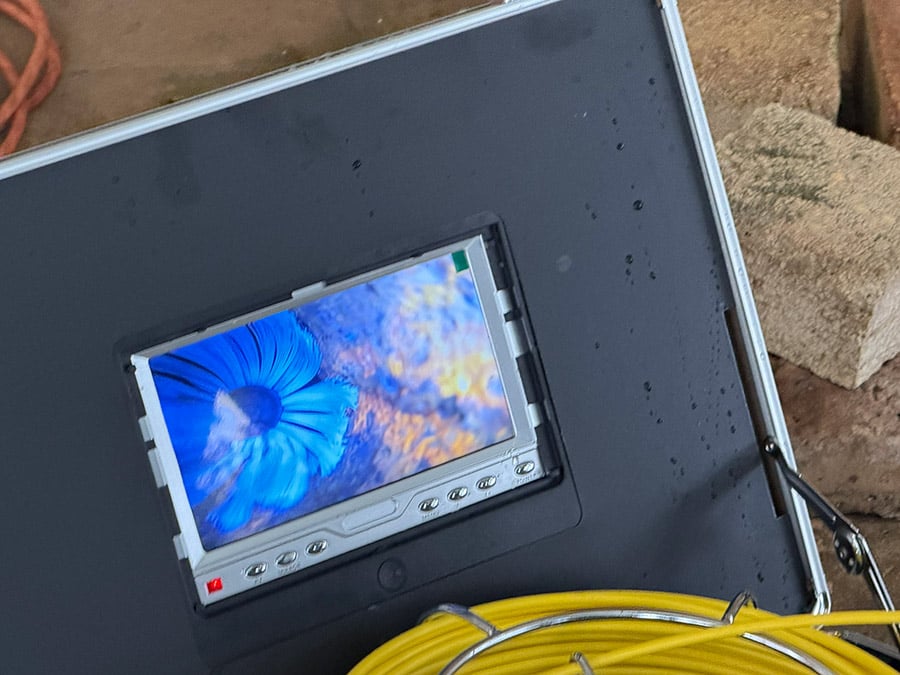
- Video camera inspection. We send a high-resolution camera through your sewer line to document the actual condition of the pipe – corrosion level, structural integrity, breaks, root intrusion, slope, and diameter.
- Method recommendation. Based on what the camera shows, we recommend CIPP, spin cast epoxy, or a combination – and explain why.
- Transparent estimate. You get a written estimate showing what we’re doing, why, and what it costs.
In many homes, the right answer is actually both methods – CIPP for the main sewer line out to the city tap, spin cast epoxy for the cast iron branch lines and vertical stacks inside the home. Offering both lets us solve the whole problem in one project.
Frequently Asked Questions
Is CIPP stronger than spin cast epoxy?
For structural restoration, yes. CIPP creates a load-bearing pipe-within-a-pipe that can stand on its own even if the host pipe fails completely. Spin cast epoxy is a coating that bonds to and depends on the host pipe’s structure. For pipes that are still structurally intact, that distinction doesn’t matter – but for pipes with cracks, breaks, or missing wall sections, CIPP is the correct choice.
Which method lasts longer?
Both are engineered for 50+ years of service life. Cured epoxy is chemically inert, so the actual coating often outlasts the warranty period significantly.
Is spin cast epoxy cheaper than CIPP?
It depends on the job. For a small-diameter branch line or vertical stack, spin cast epoxy is usually less expensive because it’s simpler and faster. For a long horizontal main, CIPP is often the more cost-effective choice per linear foot. We’ll quote both options if your pipes are candidates for either.
Can both methods be used in the same home?
Yes – and it’s often the best approach. We frequently use CIPP for the main sewer lateral and spin cast epoxy for cast iron branch lines and vertical stacks within the same project.
How do I know which one my pipes need?
You don’t have to know – that’s our job. A video camera inspection shows us exactly what’s going on inside the pipe, and from there we can recommend the right method honestly. Seeing symptoms at home? Our guide to the 10 warning signs you need trenchless sewer repair walks through what to watch for.
Is trenchless lining cheaper than traditional pipe replacement?
Almost always, yes. For a more detailed breakdown, see our analysis of whether trenchless sewer repair is worth it.
How long does the work take?
Most residential trenchless projects – whether CIPP, spin cast epoxy, or a combination – are completed in 3 to 5 days.
Not Sure Which Method Your Home Needs?
You shouldn’t have to make that call alone. The right answer starts with a video camera inspection – which tells you what’s actually happening inside your pipes and what the right repair really is.
📞 Call 469-949-3126 or request a free estimate. We’ll inspect your line, recommend the right method honestly (CIPP, spin cast epoxy, or both), and have your pipes restored in 3 to 5 days – without tearing up your yard, driveway, or slab.
A great way to reach us!