
Austin homeowners: we restore your sewer and drain lines in 3–5 days — with no excavation, no damage to your yard, and no disruption to the home you love. From vintage bungalows in Hyde Park to hillside properties in Travis Heights, Austin’s trenchless pipe lining experts are ready to fix your pipes the right way.

23+ Years of Pipe
Lining Experience

1,000+ Verified
Customer References

Completed in 3–5 Days
Stay in Your Home

50-Year Transferable
Warranty

A+ BBB Accredited
Licensed & Insured
Austin’s Trenchless Sewer Repair Specialists
Austin is unlike any other Texas city underground. Depending on where your home sits — east of IH-35 or west of it, on a flat lot or a hillside, in a 1940s bungalow or a 1970s ranch — the ground beneath your sewer lines behaves in an entirely different way. East Austin’s expansive clay contracts and swells dramatically with the seasons. West Austin’s Edwards Plateau limestone limits how deep pipes can be buried and gives cedar root systems easy access to pipe joints. And steep-terrain neighborhoods like Travis Heights and Zilker add grade-change stress that no other Texas city sees quite the same way.
Austin’s rapid growth has also meant that many older homes — bought, renovated, and brought back to life — are now revealing the sewer infrastructure their previous owners never addressed. Clay tile pipes from the 1930s and ’40s, cast iron from the post-war decades, and Orangeburg installed through the ’60s are all still in active service beneath Central Austin streets.
At Trenchless Pipe Lining, we rehabilitate Austin’s aging sewer and drain lines from the inside out — without excavating your yard, disturbing your live oak’s root zone, or disrupting the carefully landscaped outdoor spaces that make Austin homes what they are. We complete most residential projects in 3 to 5 days, and we back every job with a 50-year transferable warranty.
Signs Your Austin Home May Have a Sewer Line Problem
Austin’s combination of aging pipe materials, dramatic weather swings, and aggressive tree canopy means sewer problems often develop gradually — then fail suddenly. Here’s what to watch for.
Slow Drains That Worsen After Heavy Rain
Austin sits in one of Texas’s most active flash flood zones. When a significant storm saturates the ground, cracked sewer lines can take on groundwater, reducing flow capacity dramatically. If your drains become noticeably slower after heavy rainfall, your pipe has a structural breach — not just a surface clog.
Sewage Backing Up Into Lower-Level Fixtures
In Austin’s hillside neighborhoods — Travis Heights, Barton Hills, and parts of South Congress — homes with multiple levels are especially prone to sewage appearing in the lowest fixture first. This is a clear signal of a main line blockage or collapse and requires immediate professional assessment.
Sewer Odor in the Yard or Near the Foundation
A persistent sewer smell outside your home — particularly during dry periods when crack-gaps in the pipe open wider — indicates an active break in your sewer line. In East Austin’s clay-heavy soil, these gaps open and close with the seasons, which is why the odor can come and go before the backup arrives.
Lush, Isolated Patches of Grass
Suspiciously green or rapidly growing grass in a narrow strip across your yard is one of the most reliable visual indicators of a leaking sewer line beneath the surface. The fertilizing effect of slow-leaking sewage on Austin’s dry soil makes these patches unmistakable — especially during summer drought conditions.
Recurring Drain Backups Despite Professional Cleaning
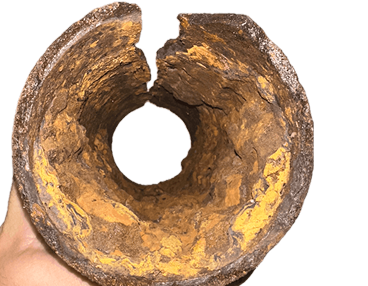
Austin’s live oak root systems are among the most persistent in Central Texas. Once a root finds entry into a sewer line — typically through a cracked joint or corroded seam — it regrows after every cleaning until the structural breach is sealed. If your drains back up repeatedly within weeks of being professionally cleaned, the pipe itself needs attention.
An Older Austin Home With No Pipe Inspection History
If your home predates 1985 and has never had a sewer camera inspection, the condition of your drain lines is genuinely unknown. Austin’s renovation boom has brought many of these older homes back into the market — but beneath the updated kitchens and new floors, the original clay tile or cast iron sewer infrastructure is often still in place and quietly deteriorating.
Trenchless Pipe Lining Services
in Austin, TX
We offer three proven no-dig lining methods for Austin homes and businesses. Every project begins with a video camera inspection — because Austin’s varied soil, topography, and pipe materials mean the right solution isn’t always the obvious one.
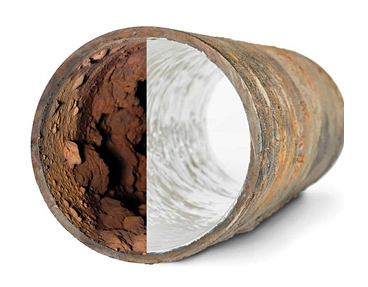
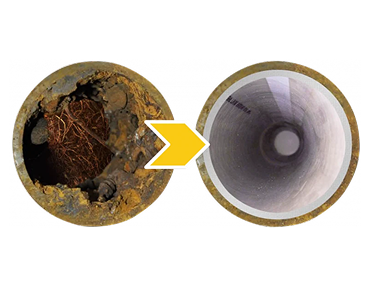
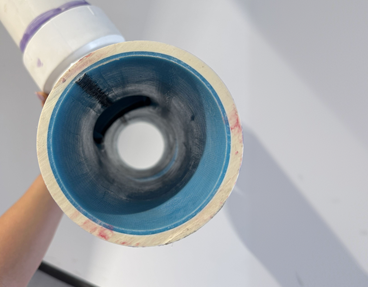
Trenchless Pipe Lining
vs. Traditional Excavation
In a city where a protected live oak can cost tens of thousands of dollars to replace — and where hillside excavation requires specialized equipment and permits — avoiding excavation isn’t just convenient. For many Austin homeowners, it’s the only financially sensible option.
| Traditional Pipe Excavation | Trenchless Pipe Lining |
|---|---|
| Takes 4–8 weeks from start to finish | Completed in 3–5 days |
| Costs $40,000–$50,000 on average | Costs $10,000–$20,000 on average |
| Live oak and native tree root zones disturbed | Zero disturbance to tree root zones |
| Hillside excavation requires permits and equipment | No excavation — existing access points only |
| Floors, tile, and cabinets removed | Floors, tile, and cabinets remain completely intact |
| Landscaping and hardscapes destroyed | Landscaping and hardscapes fully protected |
| You may be required to vacate during the process | Stay in your home from start to finish |
In Austin, where protected tree ordinances, hillside lots, and carefully curated outdoor spaces are part of the value of the home, trenchless lining protects far more than just your pipes.
Why Austin Homeowners Choose Trenchless Pipe Lining
Austin attracts plenty of plumbing companies. What makes us the right choice for a city as particular about its homes, its trees, and its character as Austin is?
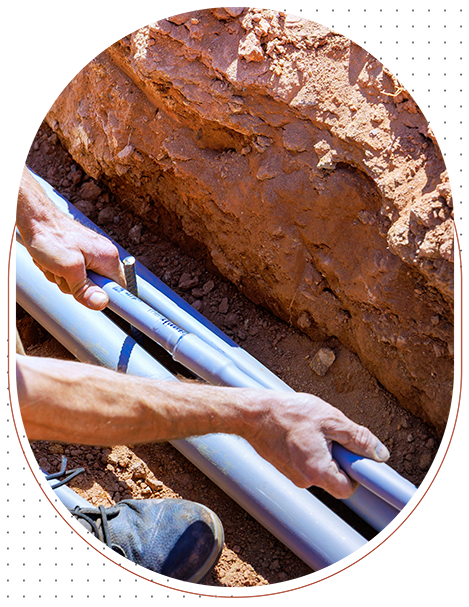
Why Austin’s Underground Pipe Environment Is Unlike Any Other Texas City
Dallas has clay. Fort Worth has age. Plano has hard water. Austin has all of these — plus a set of conditions unique to Central Texas that make its sewer infrastructure one of the most challenging in the state to repair without excavation. Here’s what makes Austin different:
Two Completely Different Soil Environments
Austin is divided underground almost as clearly as it is above. East of IH-35, the soil is dominated by expansive clay — the same Blackland Prairie material found in Dallas and Fort Worth, which swells with rain and contracts with drought, putting relentless seasonal pressure on buried pipe joints. West of IH-35, the Edwards Plateau limestone takes over. This bedrock limits how deep pipes can be buried, and the thin soil cover over limestone means pipes are more vulnerable to temperature extremes and to the root systems of cedar (Ashe juniper) trees, which penetrate rocky soil through even the smallest fractures. No other major Texas city presents both conditions within the same service area.
Steep Terrain Creates Problems Unique to Austin
Neighborhoods like Travis Heights, Barton Hills, Zilker, and parts of South Congress sit on terrain that drops significantly over short distances. That elevation change creates grade-related pipe challenges — most notably pipe bellies, where a section of pipe sags below the correct slope and becomes a permanent collection point for debris and waste. Grade changes also mean that sewer line runs in these neighborhoods are longer and more complex than on flat terrain, making traditional excavation especially invasive and expensive. CIPP lining handles grade-change runs without any ground disturbance.
Austin’s Live Oak Canopy and Tree Protection Ordinances
Austin takes its tree canopy seriously — and its live oak protection ordinances are among the strictest of any Texas city. Excavating within the critical root zone of a protected live oak requires a permit, arborist sign-off, and in some cases simply cannot be done without risking the tree’s health. Because our trenchless method requires no excavation at all, it sidesteps these restrictions entirely. We’ve completed dozens of Austin projects where traditional repair would have required the removal or significant damage of protected trees worth more than the repair itself.
Austin’s Renovation Boom Is Uncovering Aging Infrastructure
Austin’s decade-long renovation wave has brought thousands of older Central and South Austin homes back to life. New kitchens, restored original floors, updated bathrooms — but beneath them, in many cases, original clay tile and cast iron sewer lines that haven’t been touched since the Eisenhower administration. Pre-purchase sewer inspections are now increasingly common in Austin real estate transactions precisely because buyers have learned how often aging pipe infrastructure sits behind a freshly renovated facade. We work with homeowners, buyers, and real estate agents across Austin to assess pipe condition and provide lining solutions that protect both the home and the transaction.
Austin Neighborhoods We Serve
What Austin Homeowners Are Saying
Real experiences from Austin residents who chose trenchless pipe lining over traditional excavation.