
Can I Stay in My House During Trenchless Pipe Lining? A DFW Homeowner’s Guide

The Short Answer
Yes. In almost every case, DFW homeowners stay in the house during trenchless pipe lining. Because there’s no excavation, no torn-up floors, and no slab work, the disruption is closer to a plumbing service call than a construction project. Most 3–5 day jobs involve just a few hours of limited water use per day, not full days without plumbing.
Because trenchless work happens entirely from outside the home through existing cleanouts, homeowners stay in their residence throughout the project. This guide walks you through what actually happens on each day of a typical residential lining job, what “limited water use” looks like in practice, and how to plan around specific situations like working from home, pets, kids, or elderly family members.
Why Trenchless Is Less Disruptive Than You Probably Expect
The word “construction” gets attached to any home plumbing repair, but trenchless pipe lining doesn’t involve the things that make traditional excavation so disruptive. This is the same core trenchless technology Dallas Water Utilities uses to rehabilitate the city’s own sewer mains. That’s municipal-grade infrastructure work now available for residential systems, without any of the things people picture when they hear “pipe repair”:
- No trenches. Access is through existing cleanouts (the capped access points already plumbed into your system), not through excavated pits in your yard or holes in your slab.
- No opened floors or walls. Because we work through the existing pipe from the cleanout, there’s no reason to open interior walls or lift flooring.
- No heavy equipment inside the house. The mixing, curing, and installation equipment stays on the truck or in the driveway. What comes inside is compact and quiet.
- No slab jackhammering. This is the single biggest reason DFW homeowners choose trenchless. Traditional cast iron replacement under a slab requires breaking concrete inside the home, which trenchless completely avoids.
- No sewer bacteria exposure inside the home. Because the drain is never cut open inside the residence, there’s no sewer contamination to sanitize afterward, a meaningful difference from full excavation, where the pipe has to be broken apart inside the home.
For a deeper look at why this matters specifically for older DFW homes on slab foundations, see our guide on whether your DFW home has cast iron sewer pipes and how to tell by age.
What Actually Happens: A Day-by-Day Walkthrough
A typical residential trenchless lining job runs 3 to 5 days depending on the size of your home and the total footage of pipe being lined. Here’s what each phase looks like from your side.
Phase 1: Camera Inspection and Cleaning (Day 1, sometimes into Day 2)
The job starts with a video sewer camera inspection to confirm the pipe route, condition, and any spots that need special attention. From there, crews clean the existing pipe using high-pressure water (called hydro-jetting), following a documented 5-step preparation sequence of rust and scale removal, sanding, jetting, and video verification before the liner is installed. This is what allows the new liner to bond properly to the pipe wall.
What this means for you:
- Camera inspection is quiet and doesn’t require you to shut anything off.
- Hydro-jetting is louder but happens outside or through the cleanout, not inside the house.
- Water use is mostly normal during this phase. You may be asked to limit heavy water use (dishwasher, washing machine) during active jetting.
- You can be home, working, cooking, or on calls. Pets and kids don’t need to be elsewhere.
Phase 2: Liner Installation and Cure (usually 2-3 days)
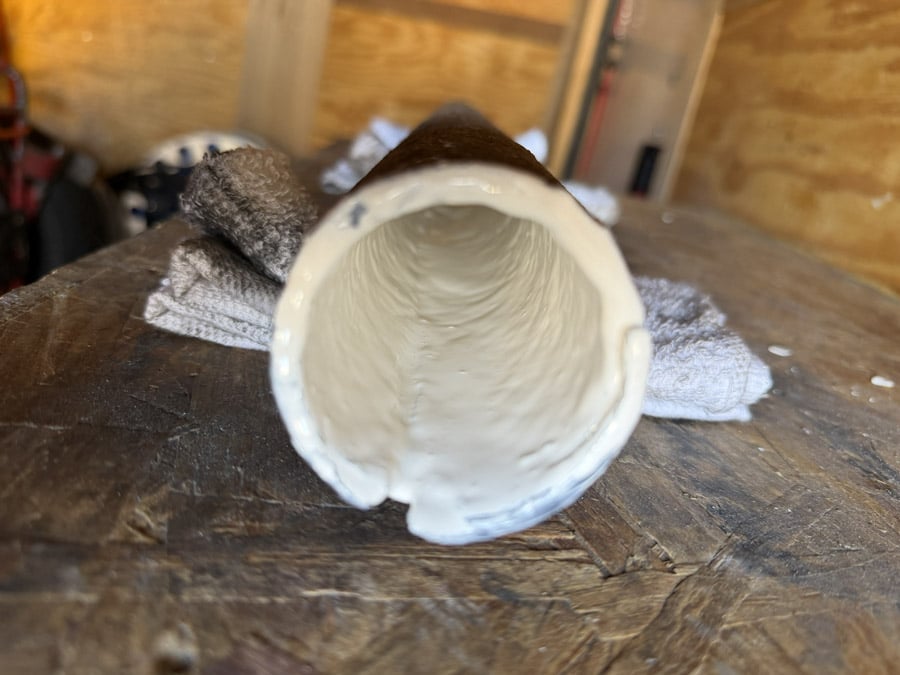
This is the main event. A resin-saturated liner is installed inside your existing pipe, pressed tightly against the interior wall, and cured using hot water, steam, or UV light, depending on the method being used. Once cured, the liner forms a new structural pipe inside the old one, sealed against future corrosion and leaks. This is the same core technique that’s been the industry standard since 1971, with continuous improvements in materials and installation methods.
What this means for you:
- There is a window (typically 1 to 4 hours, depending on the resin, pipe size, and lining method) when your household drains cannot be used while the liner cures.
- During that window, our crew will ask you to avoid heavy-water appliances (showers, dishwasher, washing machine), turn off sump pumps, and limit toilet flushing. This is not a full-day water shutoff. It’s a defined window that ends when the cure is complete.
- There may be a mild resin smell near cleanouts during the cure. It dissipates quickly and does not spread through living areas in normal cases.
- Once the cure completes, full drain use is restored the same day. You’ll shower, cook, and flush normally that evening.
Phase 3: Reinstating Connections and Final Inspection (typically the last day)
After the liner cures, any lateral connections that were temporarily covered are reopened using a small robotic cutter. A final camera inspection confirms the new liner is smooth, sealed, and correctly bonded, and the crew tests full water flow before signing off.
What this means for you:
- Water is fully available throughout this phase.
- The crew’s presence in the house is minimal, mostly at the cleanout access point.
- You receive documentation of the completed lining and the 50-year transferable materials and labor warranty. Keep this with your home records. It will convey to a future buyer.
What “Limited Water Use” Actually Looks Like
The biggest question homeowners have is what those water-restriction windows really mean for a normal day. Here’s the practical version:
- Toilets: Available most of the time. Limited only during the active cure window (a few hours on installation day).
- Showers and baths: Fully available before and after the cure window. During the cure, hold off; a morning or evening shower on either side of the window works for most households.
- Kitchen sink: Light use (hand-rinsing, filling a pot) is generally fine; heavy continuous use like running the disposal for a while is what we ask you to avoid.
- Dishwasher and washing machine: Run these before the day’s cure window starts or after it ends. Neither should run during the cure.
- Outdoor water: Sprinklers, hose bibs, and pool systems are on separate supply lines and not affected. You can water your lawn while the sewer is being lined.
Common Concerns: Working From Home, Kids, Pets, and Special Situations
Can I take work calls or video meetings?
Yes. The loudest equipment stays outside or on the truck. Inside noise is limited to occasional crew traffic near your cleanout access point and periodic camera work. Most homeowners take calls and video meetings normally throughout the job.
What about pets?
Pets can stay in the home. We recommend keeping them in a room away from the cleanout access point during active work, not for their safety, but so they don’t stress from crew traffic or bark at the equipment. Cats are typically unfazed.
What about kids?
Kids can stay in the home. School-age kids often find the equipment interesting; toddlers should be kept away from the cleanout area during active work. There are no chemical fumes or hazards inside the living space during any phase.
Elderly family members or anyone with medical needs?
The main consideration is bathroom access during the cure window. If someone in the household needs unrestricted bathroom access throughout the day (for medical, mobility, or dialysis reasons), let us know before scheduling. We can time the cure window to minimize impact or, in rare cases, coordinate temporary alternate arrangements.
Do I need to move furniture or cover anything?
No. The work doesn’t generate dust and doesn’t require access to interior walls or floors. If your cleanout access is in a garage, utility room, or exterior wall (typical for DFW homes), we work entirely from that point.
When You Might Want to Leave (Rare Cases)
A small number of situations make staying elsewhere more comfortable, even if it isn’t required:
- Very small homes (under about 1,200 sq ft) where the cleanout is in the main living area, so crew traffic is more constant.
- Homes where the cure window falls in the middle of a critical workday; some homeowners prefer to work from a coffee shop that day.
- Households with someone who has extreme sensitivity to any faint odor. The resin smell near the cleanout is mild and localized, but people with chemical sensitivities occasionally prefer to be out during the cure.
None of these are required. They’re preferences a small number of homeowners make for convenience.
How Trenchless Compares to Traditional Excavation
The reason “stay in the house” is even a question is that people are picturing traditional pipe replacement, which is a very different experience:
Comparison table: CIPP vs Spin Cast Epoxy pipe lining methods across key criteria
| Traditional cast iron replacement: | Trenchless pipe lining: |
|---|---|
| Slab jackhammered open inside the home | Access through existing cleanouts |
| Flooring removed above the pipe run | No flooring or slab work |
| Sections of yard excavated | Minimal yard impact |
| Timeline typically 3–6 weeks | Timeline typically 3–5 days |
| Many homeowners genuinely can't stay through this, especially with kids or pets | Most homeowners stay in the house the entire time |
For a fuller side-by-side look at what makes trenchless the smart economic choice as well as the practical one, see our analysis of whether trenchless sewer repair is worth it for DFW homeowners.
Frequently Asked Questions About The Trenchless Pipe Lining Process
Will I have running water during the job?
Yes. Your incoming water supply is never turned off. What’s temporarily limited is drain use (what you send down the pipe), and only during a defined window on the installation day.
Can I flush the toilet during the job?
Yes, most of the time. The only period when toilet flushing is restricted is during the active cure window on installation day, typically a few hours. Before and after that window, and on all other days of the project, toilet use is normal.
Will there be a smell?
There may be a mild resin smell near the cleanout access point during the cure. It doesn’t typically spread into the living space. Homeowners with the cleanout in an attached garage sometimes notice it there; homeowners with an exterior cleanout usually don’t notice anything at all.
How loud is it?
The loudest equipment (hydro-jetter, curing systems) is on the truck or just outside. Inside the house, noise is limited to occasional crew activity near the cleanout, similar to a plumber doing a service call.
Do I need to be home during the work?
Someone needs to provide access on the first day and be reachable during the work. After that, it depends on the specific job. Many homeowners come and go normally. We’ll set clear expectations at scheduling.
Is CIPP or epoxy better for a home I’m living in?
Both are trenchless and both let you stay in the house. The right choice depends on your pipe layout, condition, and specific needs. See our detailed comparisons of CIPP lining services and epoxy pipe lining services for the specifics.
What if I have warning signs but haven’t confirmed the pipe is failing?
Start with a video camera inspection. It’s the definitive way to know what’s happening under the slab. If you’re noticing symptoms like recurring backups, slow drains, or sewage smells, see our full guide to the 10 warning signs you need trenchless sewer repair in Dallas, Fort Worth & Austin.
Book Your Trenchless Lining Without the Stress of Moving Out
You don’t have to relocate, board pets, or take vacation days to get your cast iron pipes fixed. Trenchless lining is designed to complete inside a typical homeowner’s routine: 3 to 5 days, mostly normal water use, no torn-up floors, and a 50-year transferable warranty when it’s done.
Call 469-949-3126 or request a free estimate. We serve homeowners across the Dallas–Fort Worth Metroplex with no-dig cast iron pipe lining. You can stay in the house, and we’ll walk you through exactly what to expect before the crew ever arrives.
A great way to reach us!