
10 Warning Signs You Need Trenchless Sewer Repair in Dallas, Fort Worth & Austin

Your Sewer Line Is Trying to Tell You Something
Most homeowners don’t think about their sewer line until something goes wrong — and by the time the problem is obvious, the damage is usually well underway. The good news? Sewer lines almost always give warning signs before they fail completely.
In the Dallas–Fort Worth Metroplex and Austin, those warnings show up earlier and more often than in many parts of the country. Our expansive clay soil shifts dramatically with every wet-dry cycle, our older neighborhoods sit on aging cast iron and clay pipes, and slab foundations make traditional sewer repair brutally expensive.
That’s exactly why trenchless sewer repair — fixing damaged pipes from the inside without digging up your yard or jackhammering your slab — has become the preferred fix for North and Central Texas homeowners. But before you can repair the problem, you have to spot it.
Here are the 10 warning signs your sewer line needs attention, what each one means, and when trenchless pipe lining is the right solution.
What Is Trenchless Sewer Repair?
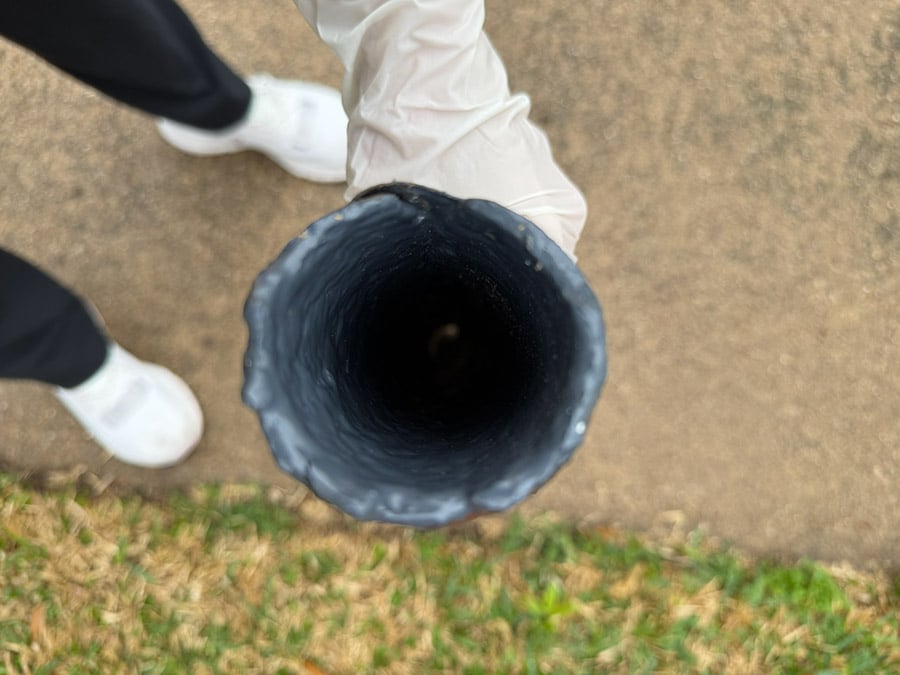
What is trenchless sewer repair, in plain English? Trenchless sewer repair is a no-dig method for fixing broken, cracked, or root-invaded sewer pipes from the inside. Instead of excavating a long trench across your yard, a plumber accesses the pipe through a small entry point and lines the existing pipe with an epoxy-based system that hardens into a smooth, seamless new pipe.
The two most common methods are:
- CIPP (cured-in-place pipe) lining — a felt liner saturated with epoxy is inserted into the pipe and cured in place (often using UV or heat), forming a strong new pipe wall inside the old one.
- Spin cast epoxy lining — a centrifugal applicator coats the inside of the pipe with epoxy, sealing cracks, pinholes, and corrosion.
The result is essentially a brand-new pipe inside your old one — sealed against cracks, root intrusion, and corrosion — typically installed in 3 to 5 days, without destroying landscaping, driveways, patios, or concrete slabs.
Now, on to the warning signs.
1. Slow Drains Throughout the House
A single slow drain usually means a clog at that fixture. But when multiple drains are slow at the same time — toilets gurgle when you run the washing machine, the kitchen sink backs up when you shower — the problem isn’t local. It’s in your main sewer line.
This is the most common early warning sign and almost always points to a partial blockage, root intrusion, or pipe collapse downstream.
2. Frequent Backups Even After Snaking
If a plumber has snaked your line two or three times in the past year and the clogs keep coming back, the issue isn’t really a clog — it’s the pipe itself. Snaking clears the symptom; cracks, offset joints, or invasive tree roots cause the symptom to return.
Trenchless pipe lining solves this permanently by sealing the entire inner wall of the pipe.
3. Sewage Smells Inside or Around Your Home
A healthy sewer system is sealed and vented. If you can smell sewage in your bathroom, garage, basement, or yard, your pipe has a crack, broken joint, or hole somewhere underground. Sewer gas isn’t just unpleasant — it contains methane and hydrogen sulfide, both of which are unsafe at sustained levels.
4. Soggy, Sunken, or Unusually Green Spots in the Yard
When a sewer pipe leaks, the surrounding soil gets a steady supply of water and nutrients. That patch of grass that’s always greener? It’s being fertilized by your sewage. In Texas summers, you might also notice soggy ground when everything around it is bone dry, or a slow depression forming where the pipe has collapsed underneath.
5. Foundation Cracks or Slab Heaving
This one is especially important for DFW and Austin homeowners. The same expansive clay soil that makes our region challenging for foundations also reacts violently to underground water leaks. A leaking sewer line can:
- Saturate the soil under your slab, causing it to swell
- Wash out soil and create voids, causing it to settle
- Trigger new foundation cracks, sticking doors, or uneven floors
If you’ve recently had a foundation inspection and they mentioned plumbing leaks — or you’re seeing new cracks in brick or drywall — your sewer line is a likely culprit.
6. Increasing Water Bills Without an Obvious Cause
While sewer leaks themselves don’t show up on your water bill, the water line that feeds your home does. And both lines run underground through the same shifting soil. If your bill has crept up $30, $50, or $100 a month with no change in usage, you likely have an underground leak — and trenchless pipe repair can address it without tearing up your property.
7. Sewage Backing Up Into Tubs, Showers, or Floor Drains
This is no longer a warning sign — this is an emergency. When wastewater has nowhere downstream to go, it comes back up through the lowest fixtures in the house, typically a basement floor drain or a first-floor shower. Stop using water immediately and call a trenchless plumbing professional.
8. Unusual Pest Activity (Rats, Roaches, or Sewer Flies)
Cracked sewer pipes are highways for pests. Rats can squeeze through holes the size of a quarter, roaches travel up from breached lines, and tiny drain flies breed in the organic sludge that builds up around leaks. If you’ve suddenly noticed pests with no obvious entry point, your sewer line is worth inspecting.
9. Recurring Tree Root Problems
Older DFW and Austin neighborhoods are full of mature oaks, pecans, and elms — and their roots are constantly hunting for water and nutrients. They find both inside cracked sewer pipes. Once roots get in, they grow quickly, eventually forming a mat that traps everything flowing past it.
Trenchless CIPP lining is particularly effective here: the new epoxy liner has no joints or seams for roots to exploit, blocking future intrusion for decades.
10. Your Home Is More Than 30–40 Years Old
Even without obvious signs, age alone is a warning in Texas. Homes built before the mid-1980s typically used cast iron sewer pipes, which have a working life of about 50–75 years before they begin to corrode, scale, and develop pinhole leaks. Many DFW and Austin homes are right at the back end of that window.
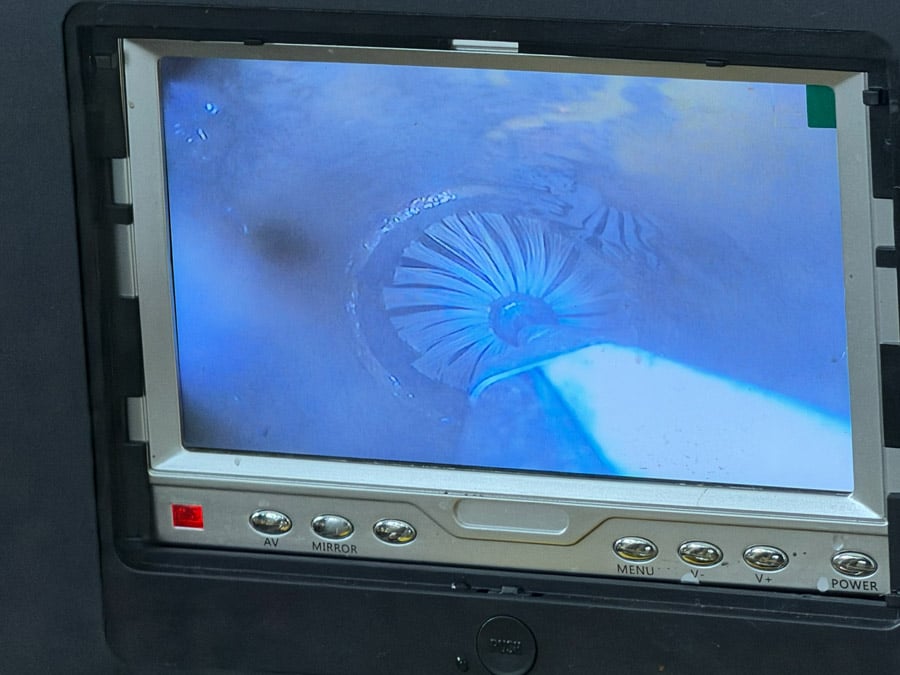
If you live in an older neighborhood — University Park, Highland Park, M Streets, Tanglewood, Ridglea Hills, Hyde Park, Travis Heights, or similar — a preventive sewer camera inspection is one of the smartest things you can do as a homeowner.
Why DFW and Austin Homes Are Especially Vulnerable
Three regional factors make sewer line problems more common — and more urgent — in our service area:
Expansive clay soil. North and Central Texas sit on some of the most reactive clay in the country. It expands when wet and contracts when dry, putting constant stress on rigid underground pipes.
Slab-on-grade construction. Most homes here don’t have basements. Sewer lines run under the concrete slab, which means traditional repair requires jackhammering through your foundation. Trenchless methods avoid that entirely.
Aging cast iron infrastructure. Tens of thousands of homes built in the 1950s through early 1980s are now reaching the end of their cast iron pipe lifespan at roughly the same time.
These conditions are exactly why no-dig pipe lining has become the dominant repair method for DFW and Austin homeowners. If you’re curious how the process actually works, our walkthrough on how trenchless pipe lining works covers it step by step.
What Should You Do If You’re Seeing These Signs?
Don’t wait. Sewer problems don’t fix themselves, and waiting almost always makes the repair more expensive — especially if soil saturation begins affecting your foundation.
The right next step is a video sewer camera inspection. A small waterproof camera is fed into your line and shows exactly what’s happening inside the pipe — cracks, root intrusion, collapses, bellies, scale buildup — with no demolition required.
From there, a qualified trenchless contractor can recommend:
- Cured-In-Place (CIPP) pipe lining for pipes that are structurally intact but cracked, corroded, or leaking
- Cast iron pipe lining for older homes with corroded iron lines under slabs
- Spin cast epoxy lining for smaller-diameter or branch lines with leaks and corrosion
- Sewer connection repair for damaged joints where your line meets the city main
The right method depends on what the camera shows — which is why diagnosis comes before any repair recommendation.
Frequently Asked Questions
How do I know if it’s a sewer line problem or just a clogged drain?
A single slow drain is usually a localized clog. If multiple fixtures slow down at once, sewage smells appear, or you see soggy spots in your yard, the problem is in the main sewer line, not the individual drain.
Can I do trenchless pipe repair on an old cast iron line?
Yes. Cast iron pipe lining is one of the most popular solutions for aging cast iron pipes in DFW and Austin homes. The epoxy liner restores structural integrity and creates a smooth interior that won’t corrode like cast iron does.
Will trenchless sewer repair damage my yard, driveway, or foundation?
No — that’s the whole point. Most trenchless jobs require only one or two small access points. Your landscaping, concrete, and slab stay intact.
How long does the repair take?
Most residential trenchless pipe lining projects are completed in 3 to 5 days. Traditional excavation, by comparison, can take 4 to 8 weeks once you factor in digging, replacement, backfilling, and surface restoration.
How long does trenchless pipe lining last?
A properly installed CIPP or epoxy pipe liner is rated for 50+ years. Trenchless Pipe Lining backs every lined pipe with a 50-year transferable warranty, so the protection carries over if you sell your home. Because the new liner is seamless and chemically resistant, it’s typically more durable than the original pipe it restored — especially against root intrusion, corrosion, and joint failure.
Is trenchless sewer repair more expensive than traditional repair?
No — trenchless is usually significantly less expensive. Trenchless pipe lining typically runs $10,000 to $20,000, while traditional excavation and pipe replacement can run $40,000 to $50,000 once you account for digging, new pipe, backfill, and restoring landscaping, driveways, and concrete.
Does homeowners insurance cover trenchless sewer repair?
Sometimes — it depends on the cause of the damage and your specific policy. We cover this in more depth in our guide on insurance coverage for trenchless sewer repair.
How much does a sewer camera inspection cost?
Inspection pricing varies, but it’s typically the most affordable step you can take to confirm whether you actually have a sewer line problem before committing to any repair.
What’s the difference between CIPP and spin cast epoxy lining?
Both create a new pipe inside your existing one using epoxy. CIPP (cured-in-place pipe) uses a felt liner saturated with epoxy that’s inserted into the pipe and cured in place — ideal for larger sewer mains and longer runs. Spin cast epoxy lining uses a centrifugal applicator to coat the inside of the pipe with epoxy, and is often better suited to smaller-diameter or branch lines. We’ll recommend the right method after the camera inspection.
Don’t Wait Until Sewage Is Backing Up Through the Tub
If you’re noticing any of the warning signs above, the smartest, cheapest move you can make right now is a video sewer camera inspection. It removes the guesswork, tells you exactly what you’re dealing with, and lets you fix the problem before it turns into a foundation issue or a full-blown emergency.
Trenchless Pipe Lining serves homeowners across the Dallas–Fort Worth Metroplex and Austin with no-dig sewer repair, CIPP epoxy lining, and cast iron pipe restoration — all completed without tearing up your yard, driveway, or slab.
Call 469-949-3126 or request a free estimate today. We’ll tell you what’s actually wrong with your line — and fix it without the trench.
A great way to reach us!