
Trenchless Pipe Repair for Cast Iron Sewer Lines Under Slabs in Dallas–Fort Worth

For homeowners in Dallas–Fort Worth dealing with failing sewer lines—especially cast iron pipes under slab foundations—the biggest concerns are usually time, cost, and disruption. Many assume excavation is the only option, but that’s no longer the case.
Modern trenchless technology offers a faster, less invasive, and often significantly more affordable solution. Understanding the difference between traditional excavation and trenchless pipe repair can help you make a more informed decision about your home.
The Reality of Excavating Sewer Lines Under a Slab
In many Dallas-area homes, sewer lines run beneath the concrete slab foundation. When these pipes fail, traditional repair methods require breaking through floors and excavating the system from below.
For a typical 2,000-square-foot home, this process can take several weeks—and often longer depending on the scope of work. Costs commonly fall in the $40,000 to $60,000 range once demolition, labor, and reconstruction are factored in.
Beyond the financial impact, the disruption is significant. In most cases, excavation requires:
- Moving out of the home during repairs
- Removing and replacing flooring such as tile, wood, or engineered materials
- Storing furniture and belongings off-site
- Completing extensive restoration before the home is livable again
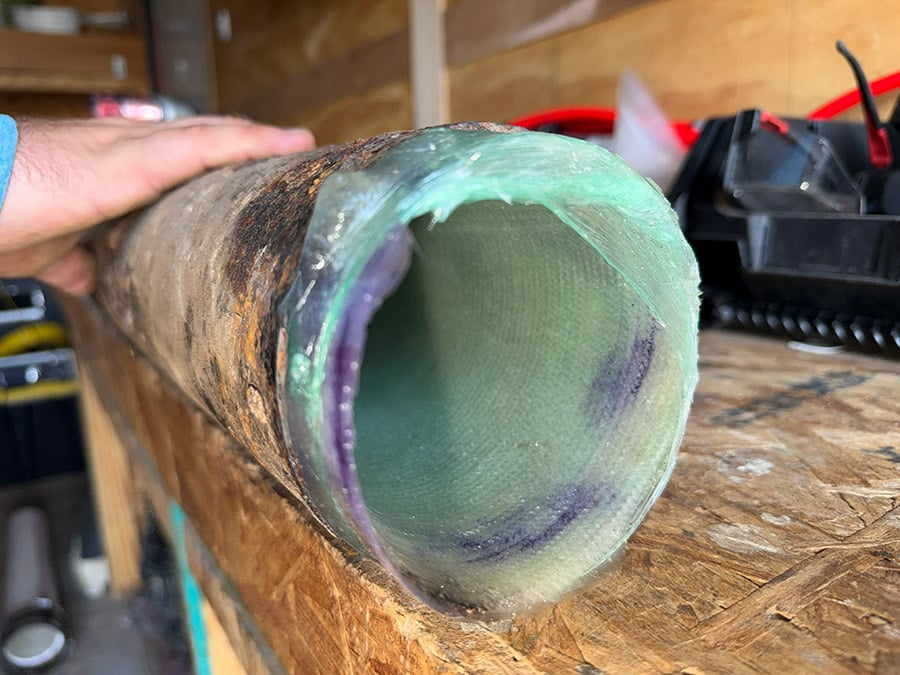
A Faster, Less Invasive Alternative
Trenchless pipe repair offers a completely different approach. Instead of removing the damaged pipes, they are restored from the inside using a specialized trenchless pipe lining installation process.
For the same 2,000-square-foot home, trenchless pipe lining can typically be completed in just 3–4 days at a cost of approximately $10,000 to $20,000. Because the work is done internally, there is little to no need for demolition, and most homeowners are able to remain in their home during the process.
In many cases, plumbing can still be used during portions of the installation, making the experience far more manageable compared to traditional excavation.
Compared to excavation, trenchless pipe repair allows homeowners to:
- Stay in their home during the project
- Avoid breaking through floors or foundations
- Reduce overall project time from weeks to just a few days
- Minimize or eliminate post-repair restoration
Excavation vs. Trenchless Pipe Repair: A Side-by-Side Comparison
| Factor | Traditional Excavation | Trenchless Pipe Repair (CIPP) |
| Timeline | 6–8 weeks or longer | 3–4 days |
| Cost | $40,000–$60,000 | $10,000–$20,000 |
| Disruption | Major (floors removed, home unusable) | Minimal |
| Living in Home | Typically not possible | Usually able to stay |
| Property Damage | Extensive (floors, slab, finishes) | Little to none |
| Restoration Needed | Significant | Minimal |
Why Trenchless Pipe Repair Costs Up to 50% Less
The difference in cost comes down to what you’re actually paying for.
With traditional excavation, a large portion of the expense isn’t just the pipe—it’s everything around it. Breaking through concrete, removing flooring, hauling debris, and rebuilding the space afterward all add significant time, labor, and material costs.
Trenchless pipe lining eliminates most of that work. By restoring the existing pipe from the inside rather than removing it, the process is more efficient and far less labor-intensive—resulting in a faster project and lower overall cost for homeowners.
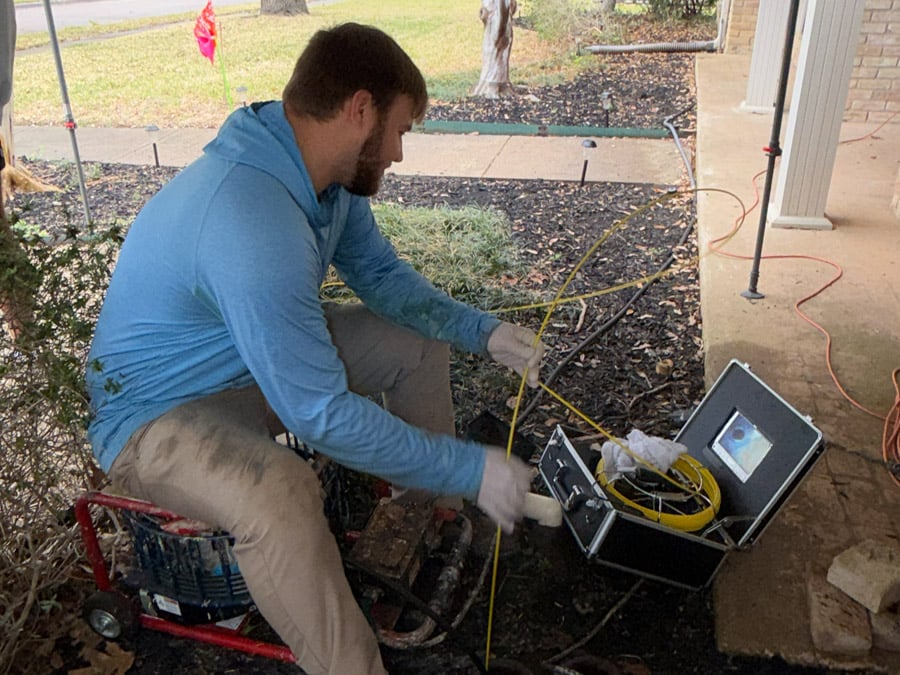
How CIPP Pipe Lining Works
Cured-In-Place Pipe (CIPP) lining is a proven method used to permanently restore damaged sewer pipes.
The process begins with a camera inspection to evaluate the condition of the pipe, followed by thorough cleaning to remove buildup and debris. A resin-saturated liner is then inserted into the existing pipe and cured in place, forming a new, seamless pipe within the original structure.
Once completed, the restored pipe is resistant to corrosion, free of joints, and designed to last for decades—often 50 years or more.
If you’d like a more detailed breakdown of this process, you can learn more about what trenchless pipe repair is and how it works.
Why This Matters in Dallas–Fort Worth
Homes throughout Dallas–Fort Worth are particularly susceptible to sewer line issues due to aging cast iron plumbing and shifting soil conditions common in North Texas.
Because many homes are built on slab foundations, excavation can be especially invasive and costly. Trenchless pipe repair provides a practical solution that aligns with how homes in this region are built, allowing for repairs without tearing apart the structure above.
Making the Right Decision for Your Home
When comparing trenchless pipe repair to excavation, the differences are clear. One approach can take weeks, require major demolition, and cost significantly more, while the other can restore your pipes in just a few days with minimal disruption to your home.
For many Dallas–Fort Worth homeowners, especially those with cast iron sewer lines under slab foundations, trenchless pipe lining offers a faster, cleaner, and more cost-effective solution.
Rather than tearing apart floors and rebuilding your home after the fact, Cured-In-Place Pipe (CIPP) lining restores your existing pipes from the inside—providing a long-lasting solution without the need for excavation.
In some situations, homeowners may also have options through their insurance coverage, depending on the cause of the pipe damage—learn more about how insurance may apply to sewer pipe repair.
If you’re experiencing sewer line issues or aren’t sure which repair option is right for your home, the best next step is a professional inspection to evaluate your pipes and walk you through your options.
A great way to reach us!